
Research
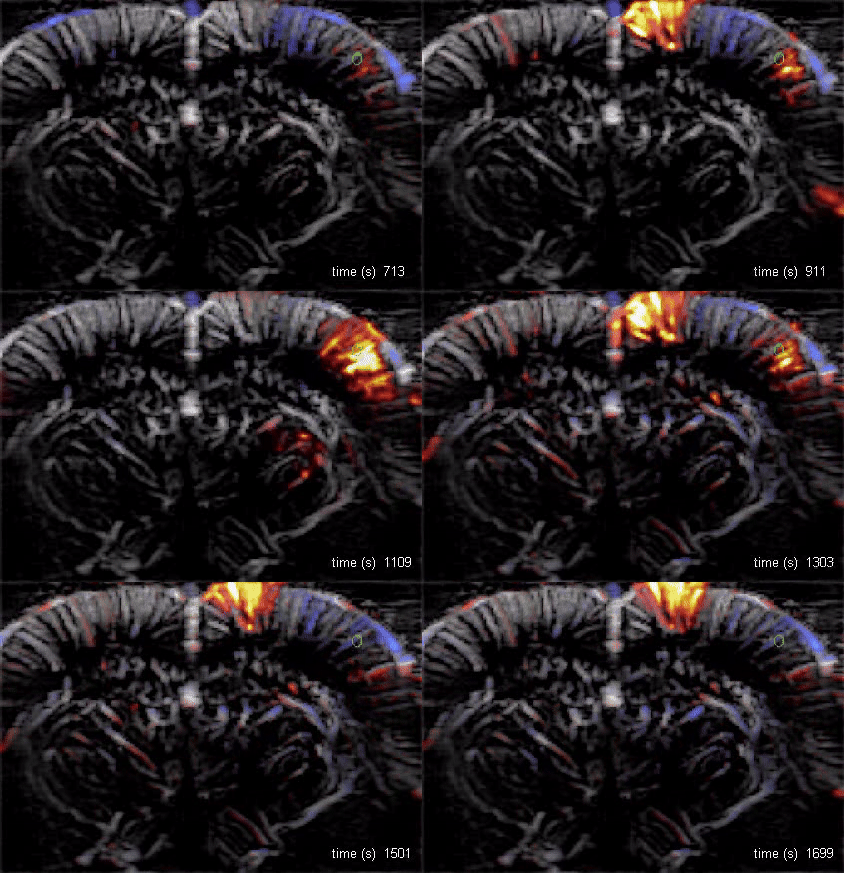
Our expertise is to record brain-wide activity with functional ultrasound imaging combined with state-of-the-art tools to interrogate neural circuits, such as in vivo electrophysiology, optogenetics, and fiber-photometry.
Using this comprehensive approach, we have two main axes of research:
- Vision
- Internal States


Funding and Collaborations

CRC1690
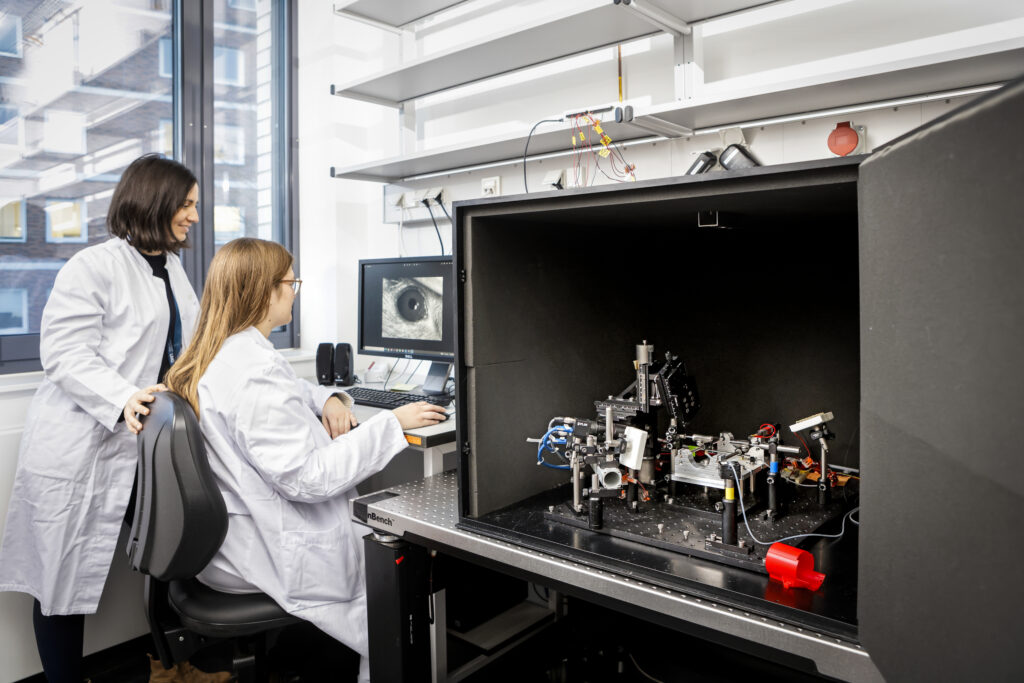
Optogenetic retinal therapy promises a universally applicable solution for restoring lost vision. However, early-onset blindness causes significant reorganization of the brain, which can compromise therapy outcomes. Using functional ultrasound imaging, we will characterize blindness-induced plasticity in models of early- and late-onset blindness. We will use an opsin that can be activated in normal light and will investigate how these brain changes affect visual perception after treatment using naturalistic stimuli. This will provide new insights into the plasticity of the brain and contribute to the optimization of future therapies.
View on website
FOR 5807
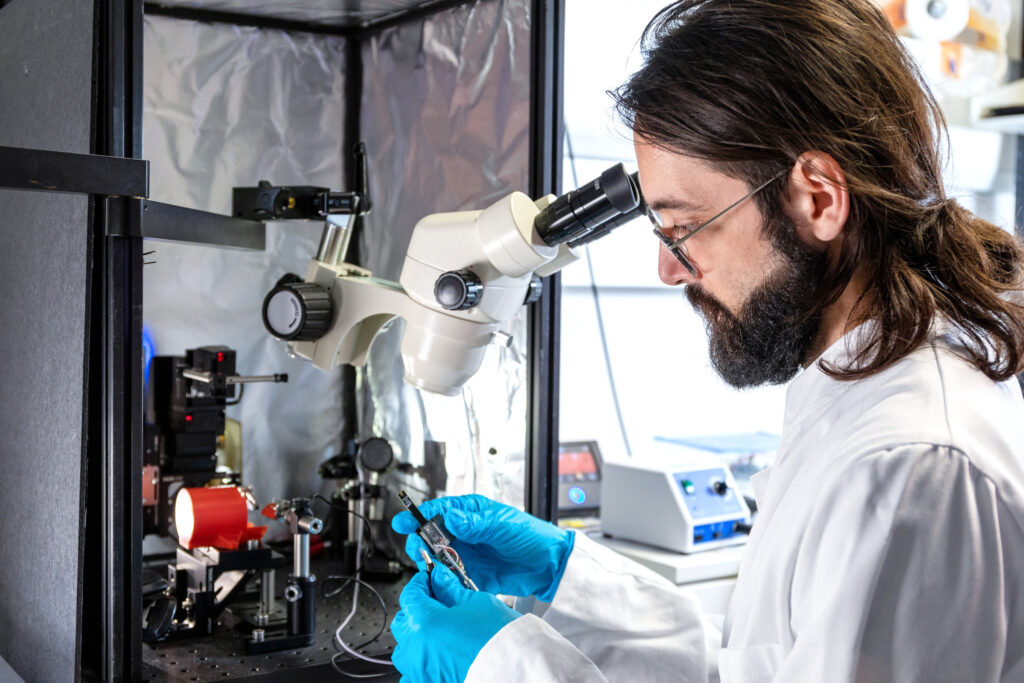
The locus coeruleus (LC), a small brainstem nucleus with widespread projections throughout the brain, modulates cognitive and physiological processes such as attention, learning, arousal, and autonomic regulation. LC neurons primarily release noradrenaline (NA) and can co-release other neurotransmitters like dopamine (DA), which influence brain activity via G-protein-coupled receptors (GPCRs) in target regions. While the LC was traditionally thought to generate a uniform arousal signal, it is now hypothesized to act in a modular fashion, producing distinct effects in different brain areas. In this project, we aim to determine whether LC neurons exhibit distinct physiological and molecular properties based on their projection targets, thereby exerting specific local effects on neuronal, glial, and vascular functions, or whether these effects are shaped by regional differences in GPCR expression and neurotransmitter uptake dynamics.
View on website
EKFZ Team II
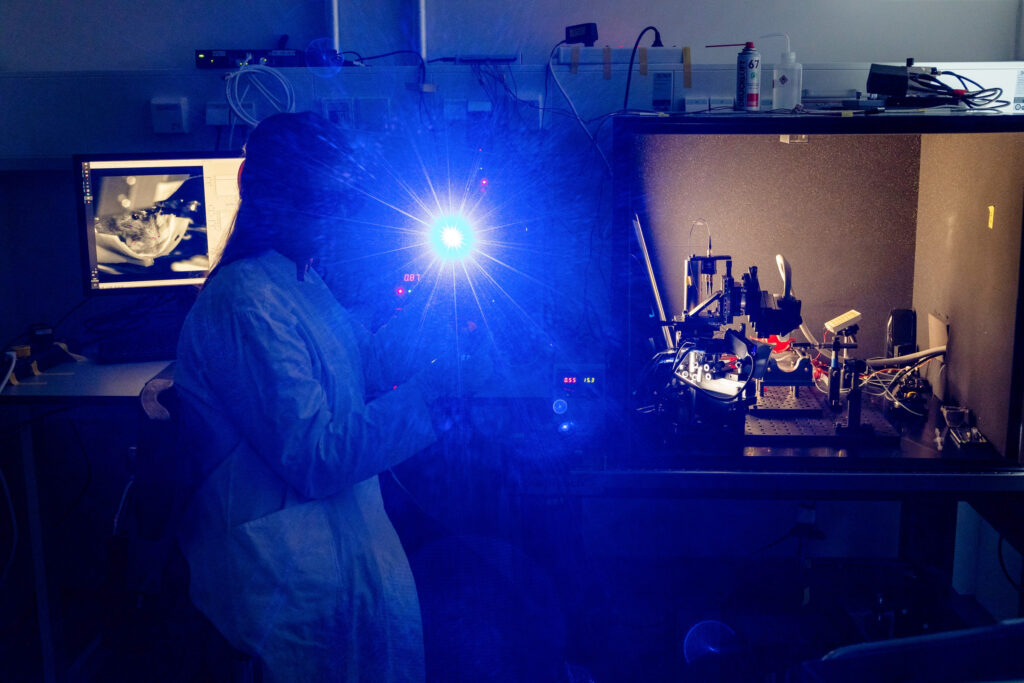
Degenerative retinal diseases such as retinitis pigmentosa (RP) and geographic atrophy (GA) affect approximately 10 million people worldwide, leading to significant and often irreversible vision loss. Optogenetic therapies have emerged as a promising avenue for treating these diseases by utilizing light-sensitive proteins (opsins) to confer light sensitivity to surviving retinal cells, such as retinal ganglion cells (RGCs). In these therapies, visual inputs are converted into stimulation patterns via specialized camera-equipped glasses. Despite the potential for significant improvements in vision restoration, optogenetic approaches face considerable challenges, such as achieving sufficient resolution and light sensitivity.
View on website